


Interviews
CAR Method for Interview Answers: Challenge, Action, Result
Use the CAR interview method to turn a real experience into a concise answer that makes your decision, contribution, and result easy to evaluate.
Interview Pilot Editorial Team
3 min read
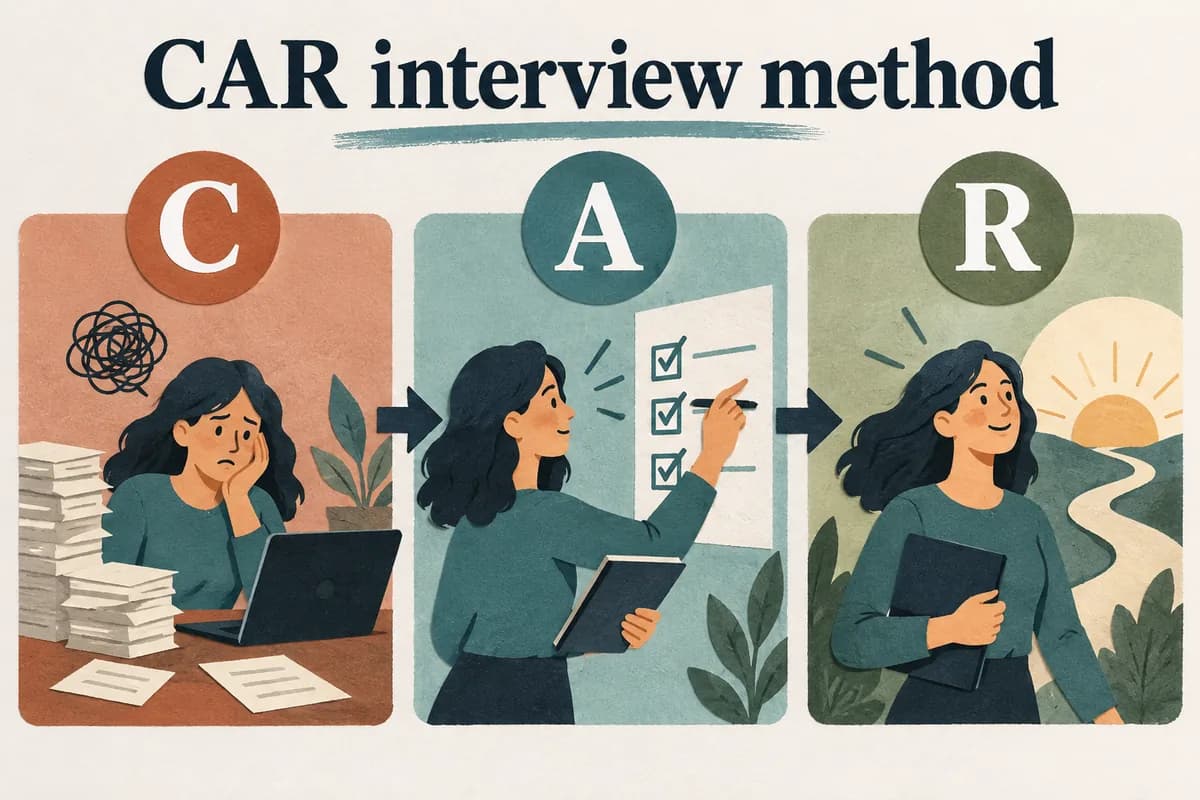
The CAR method structures an interview story as Challenge, Action, and Result. It is most useful when an interviewer asks for a specific past example and you need a short path from the problem to your contribution.
West Texas A&M University's interview guide describes the same three-part logic and emphasizes your own actions and what you learned. CAR is a preparation tool, not a script that should make every answer sound identical.
What does CAR stand for?
- Challenge: What needed to change, and why did it matter?
- Action: What did you personally decide and do?
- Result: What happened, what evidence supports it, and what did you learn?
CAR compresses the separate Situation and Task portions of STAR into one opening. Use it when context is simple. If responsibilities or constraints need careful explanation, the behavioral interview question guide can help you decide whether a longer STAR structure is clearer.
Build the answer around one decision
Choose one event rather than combining several projects. Give only enough context for the action to make sense. Then explain the tradeoff you faced, the option you selected, and how you worked with others.
Weak: “Our launch was behind, so I communicated and worked hard until it succeeded.”
Stronger: identify the missed dependency, the people affected, the change you proposed, and the evidence used to assess the outcome. “Action” should not disappear into we if the interviewer is evaluating your contribution.
CAR answer example
Question: “Tell me about a time you improved an inefficient process.”
Challenge: Weekly support reports took two hours because three exports used different category names. Action: I mapped the conflicting labels, agreed on one definition set with support and operations, and built a checked import template. I ran it beside the old process for two weeks before switching. Result: Preparation fell from about two hours to forty minutes, and both trial reports reconciled to the original totals. I documented the exceptions that still needed manual review.
The example works because the result has a defined comparison and does not claim that automation eliminated every exception.
Use an honest result
A result can be a measured improvement, an accepted recommendation, a prevented error, useful feedback, or a lesson applied later. If the outcome was poor, explain what you changed afterward rather than disguising it. Our guide to answering a failure question shows how to keep accountability visible.
Before the interview, outline several CAR stories in keywords. Practice saying them naturally, then remove details that do not help the listener understand the challenge, your action, or the result.


Topics
interviews
answer frameworks
behavioral interviews
Continue reading
Interviews
SOAR Method for Interview Answers: Use the Right Version
Learn the Situation, Obstacle, Action, Result version of SOAR for interviews while avoiding confusion with other frameworks that use the same acronym.
October 29, 2026
2 min read

Interviews
Learning Agility Interview Questions: Learn, Test, and Adapt
Prepare learning agility interview answers about unfamiliar work, feedback, failed assumptions, transfer of learning, and changing course with evidence.
November 7, 2026
2 min read
Interviews
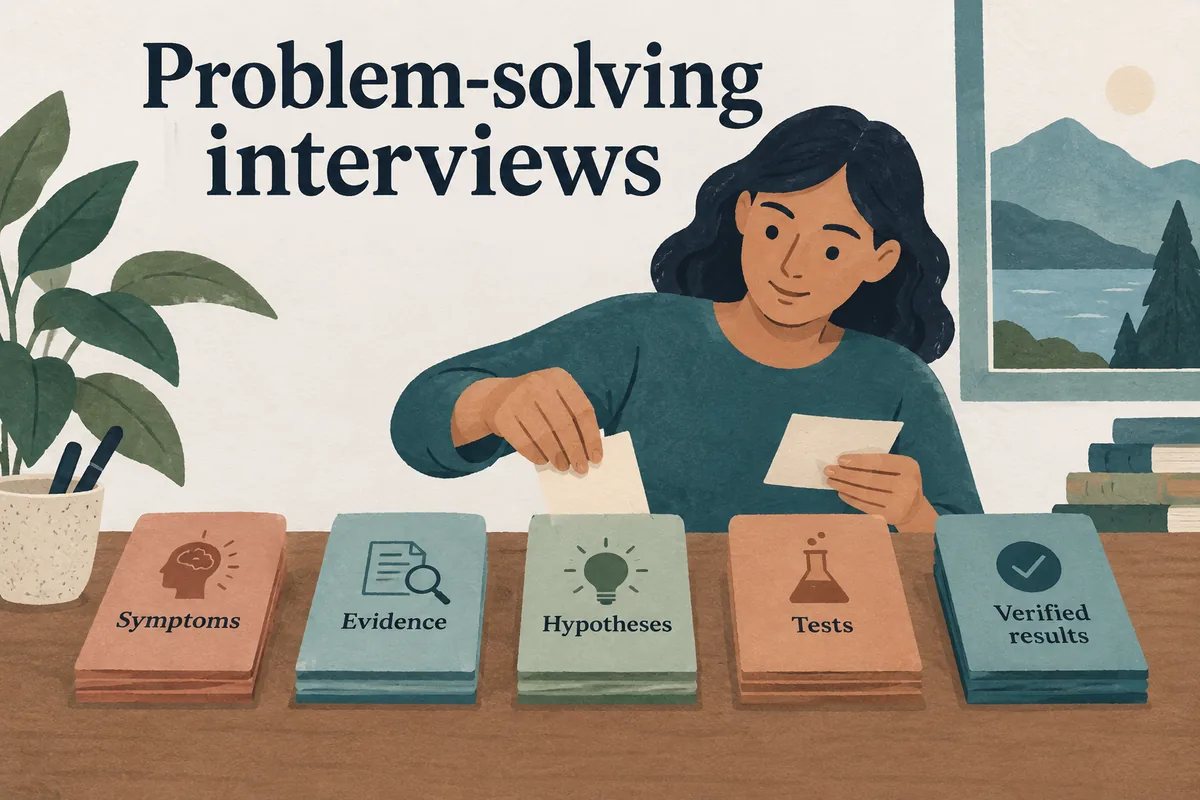
Problem-Solving Interview Questions: Diagnose Before You Solve
Prepare problem-solving interview answers that define the problem, separate evidence from assumptions, test causes, compare options, and verify results.
November 7, 2026
2 min read