


Interviews
How to Prepare for a Group Interview
Prepare for an interview with other candidates by contributing clearly, listening well, and helping a group complete its task without dominating.
Interview Pilot Editorial Team
3 min read

Prepare to contribute alongside other candidates, not just answer an interviewer on your own. A group interview can include shared questions, discussion, or a collaborative task. A panel interview is different: one candidate meets several interviewers. If your invitation is unclear, ask which format to expect.
UC Davis distinguishes these formats and notes that group interviews may involve projects as well as listening to other candidates' answers. For the other format, use our panel-interview guide.
Prepare your own contribution before the group meets
Review the role and prepare a concise introduction, a relevant example of teamwork, and a time you helped finish a task under constraints. Understand what you actually did in those examples so you can answer follow-ups.
Read any exercise instructions carefully. Check whether materials, calculations, or a presentation are expected. If the employer provides a scenario in advance, prepare within the stated rules; do not assume outside assistance is permitted.
You cannot prepare everyone else's contributions, so avoid rehearsing a plan in which you always become the leader. The useful role may be clarifying a requirement, checking an assumption, or summarizing the decision.
In shared questions, add evidence rather than repetition
When another candidate makes a point similar to yours, briefly acknowledge it and provide your own example or a different useful detail. You do not need to contradict them to stand out.
For example:
I also use a shared task list. One detail I would add is assigning an owner to each handoff. In my last project, that helped us identify two tasks that everyone had assumed someone else was doing.
This fictional answer contributes something specific without criticizing the other person. Use only an example that is true for you.
Work through the task, not a performance of leadership
Suppose the group has 15 minutes to recommend one of three locations for a community event. A useful contribution might be to check the decision criteria before debating favorites.
| Moment | A constructive intervention |
|---|---|
| The brief is unclear | Can we confirm whether staying within budget is a requirement or a preference? |
| Ideas are scattered | We have three options. Could we compare each against cost, access, and capacity? |
| Someone has not spoken | Morgan, is there anything you would add about the access requirements? |
| Discussion is running long | We have four minutes left. Which trade-off do we need to resolve before recommending an option? |
| A conclusion is emerging | I'll summarize what we agreed so we can check that nothing is missing. |
These are practice phrases, not an employer scoring rubric. Do not repeatedly interrupt to announce the time or invite a quiet person to speak in a way that puts them on the spot. Use an intervention when it helps the work.
Handle disagreement without turning it personal
Explain the criterion behind your concern: "That option is cheaper, but it exceeds the travel limit in the brief." Ask how the group wants to resolve the trade-off. If the group chooses another reasonable approach, contribute to making it work rather than withdrawing.
If you make an error, correct it promptly. Pretending a mistaken calculation is right is less useful than helping the group reach a sound conclusion.
Debrief your contribution honestly
If asked afterward, explain what you contributed, what the group decided, and what you would improve. Do not claim the whole result as your own. If you were mainly listening early on, describe how that informed your later contribution rather than inventing a leadership role.
Practicing a tight-deadline example can help you explain how you manage constraints. In the group itself, stay responsive: useful collaboration is more important than executing a prewritten script.
Topics
group interviews
interview formats
Continue reading

Interviews
Online Interview Dress Code: What to Wear on Camera
What to wear for a video interview: the right outfit, camera-friendly colors, what to wear below the waist, and body language tips that read well on screen.
November 8, 2026

Interviews
Insurance Questions for Interview: 10 Answers That Land
The 10 most common insurance questions for interview panels across underwriting, claims, sales and actuarial roles — with answer guidance for each.
November 8, 2026
19 min read
Interviews
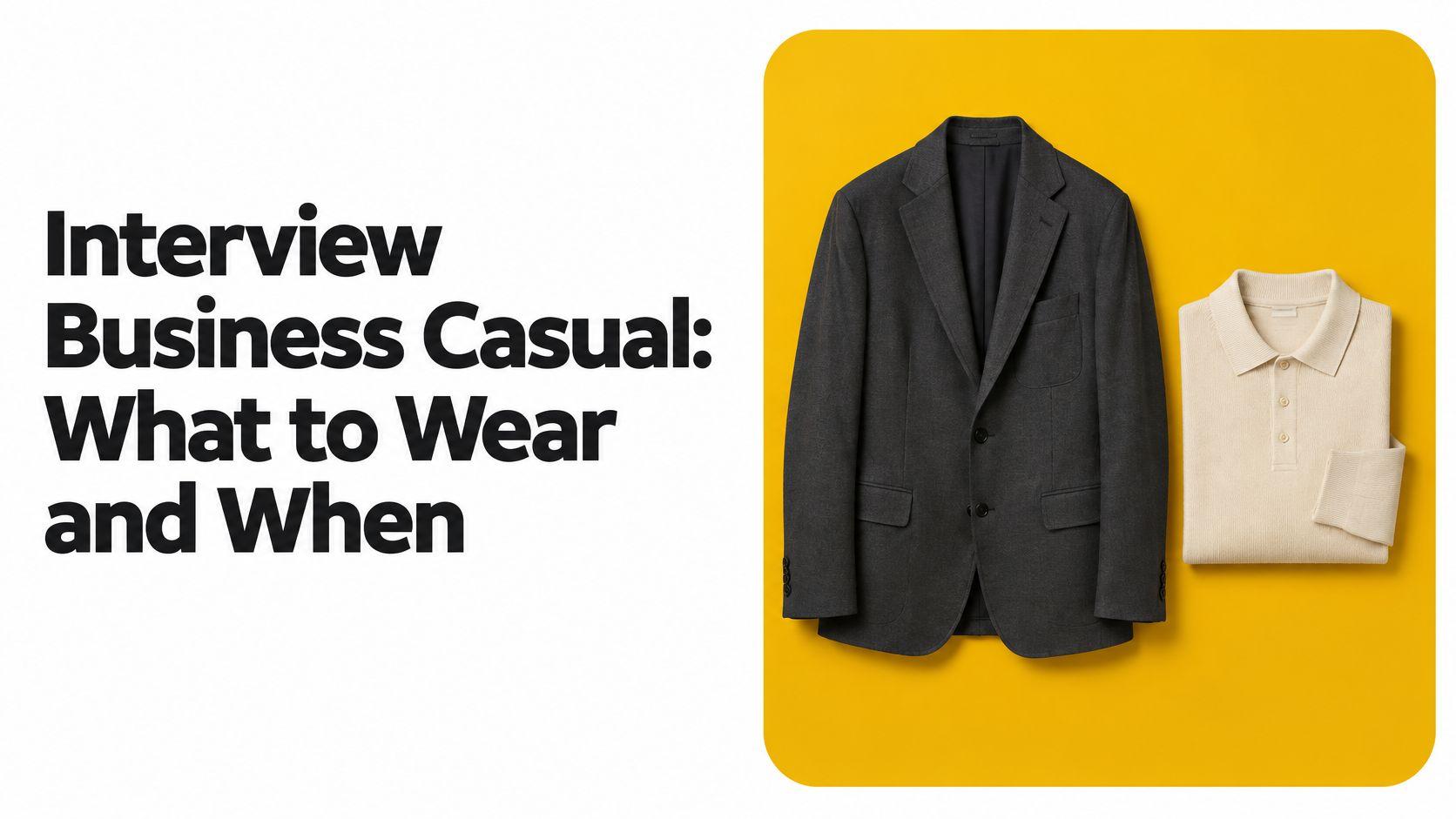
Interview Business Casual: What to Wear and When
Interview business casual explained: industry-by-industry outfits, piece-by-piece checklists and video-call tips so you dress one step smarter.
November 8, 2026
14 min read